Fire & Smoke Damage Surface Restoration After a Property Fire
After a fire, many property owners assume that smoke-stained brick, blackened concrete, damaged stone, or heavily soiled wood must be completely removed and replaced. In many cases, however, the underlying material may still be structurally sound and capable of being professionally cleaned or restored.
G Power Washing OC provides fire and smoke damage surface restoration for qualifying residential, commercial, and industrial properties. Depending on the material and severity of the damage, specialized cleaning, pressure washing, soft washing, and abrasive blasting may be used to remove soot, smoke residue, fire staining, charred surface material, damaged paint, and deteriorated coatings.
Surface Restoration After Fire & Smoke Damage
The goal of professional surface restoration is to remove damaged surface material and contamination while preserving as much of the original structure as possible when the substrate remains safe and serviceable.
Brick Fire & Smoke Stain Removal
Brick can absorb smoke, soot, and carbon staining during a fire. Depending on the condition of the masonry, professional cleaning or abrasive blasting may help remove black fire marks, smoke residue, burned paint, coatings, and surface contamination from compatible brick.
Restoring existing brick can sometimes reduce the need for unnecessary demolition or replacement when the masonry itself remains structurally sound.
Natural Stone Fire Damage Restoration
Natural stone surfaces can become darkened by soot, smoke, burned coatings, and carbon deposits after a fire. Abrasive blasting may be appropriate for certain stone surfaces when conventional washing is not sufficient.
Because natural stone varies significantly in hardness, age, texture, and condition, each project should be evaluated individually. A test area may be recommended before larger-scale restoration begins.
Concrete Wall & Surface Restoration After Fire Damage
Concrete walls, floors, foundations, exterior structures, and other concrete surfaces may develop smoke staining, soot deposits, burned coatings, and discoloration after a fire.
Depending on the condition, professional pressure washing, chemical treatment, or abrasive blasting may be used to remove fire residue and damaged coatings while preparing the concrete for sealing, painting, recoating, or continued use.
Wood Surface Restoration After Smoke & Fire Damage
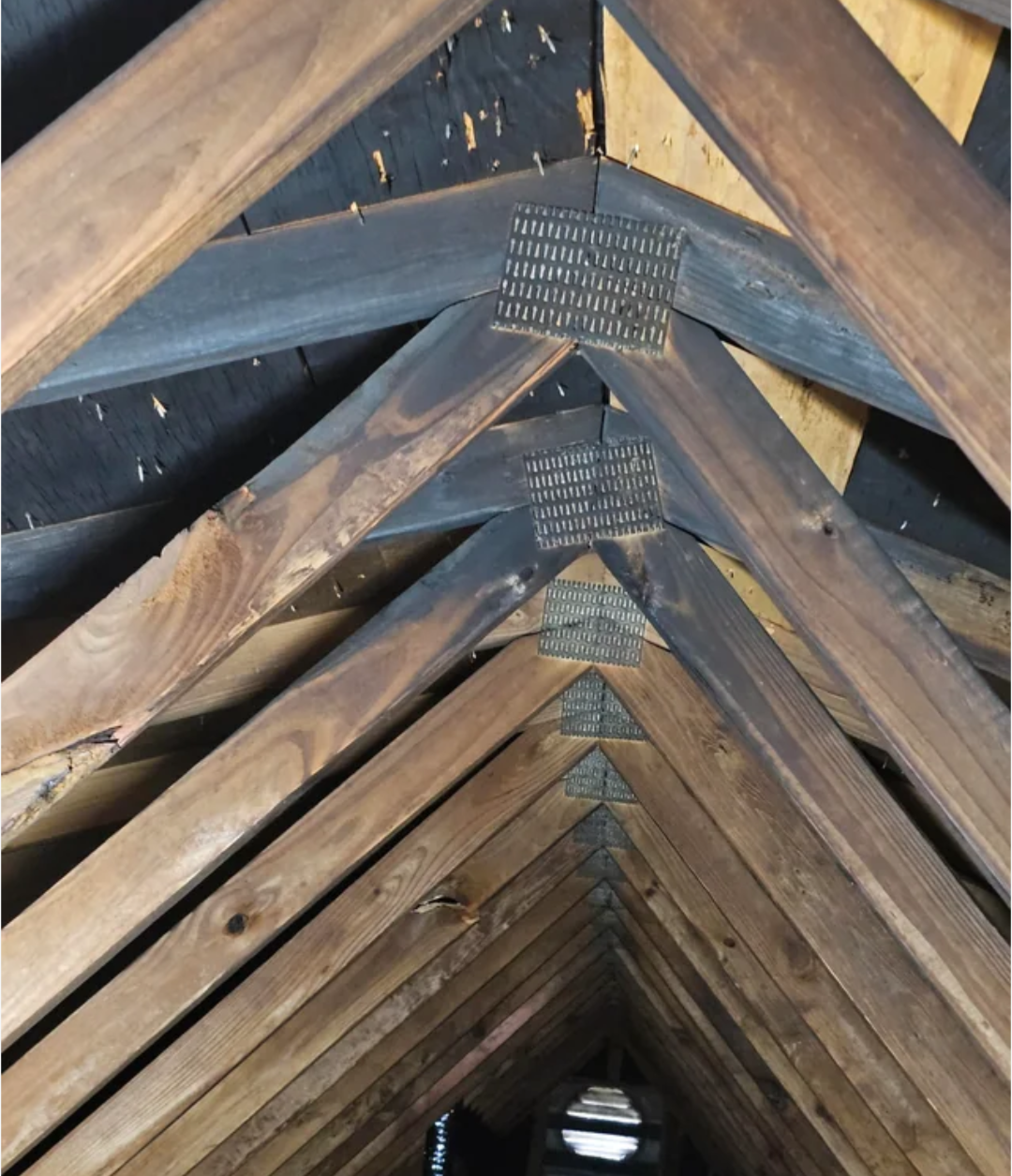
Wood framing, beams, siding, and other wood surfaces may become covered with soot, smoke residue, or surface charring after a fire. In qualifying situations, careful abrasive cleaning may help remove damaged surface material and reveal cleaner wood underneath.
Wood requires a more controlled approach than masonry or steel because excessive blasting can damage the grain or remove too much material. The cleaning method must be selected according to the type of wood, depth of charring, surface condition, and restoration goal.
Abrasive Blasting for Fire Damage Restoration
Abrasive blasting can be a useful restoration method when soot, burned paint, damaged coatings, carbon residue, or surface charring cannot be removed effectively with conventional washing alone.
The blasting media, air pressure, equipment, and technique must be selected according to the material being restored. Brick, stone, concrete, wood, steel, and other surfaces require different approaches.
Soot & Smoke Residue Removal
Smoke and soot can travel far beyond the area where the fire itself occurred. Walls, ceilings, structural components, masonry, concrete, and exterior surfaces may all develop visible black staining and residue.
Professional surface cleaning can help remove loose soot, embedded smoke residue, carbon deposits, and other contamination before repainting, sealing, coating, or restoration work continues.
Removing Burned Paint & Damaged Coatings
Heat and smoke can damage existing paint and protective coatings even when the underlying structure remains usable. Abrasive blasting can remove compatible blistered, burned, peeling, or deteriorated coatings from masonry, concrete, steel, and other durable surfaces.
Removing damaged coatings also helps expose the underlying substrate so contractors and property owners can better evaluate the condition of the surface before repairs or recoating.
Structural Steel Fire & Smoke Cleanup
Steel beams, metal frames, structural components, equipment, and other metal surfaces may develop smoke residue, burned coatings, rust, and corrosion following a fire or exposure to firefighting water.
Abrasive blasting can remove compatible soot, damaged coatings, rust, corrosion, and surface contamination while preparing the steel for inspection, primer, paint, or protective coating systems.
Can Fire-Damaged Surfaces Be Restored Instead of Replaced?
Sometimes. If brick, stone, concrete, wood, steel, or another structural material remains safe and structurally sound, professional cleaning or surface restoration may help preserve the existing material instead of automatically replacing it.
However, surface appearance alone cannot determine structural safety. Fire-damaged framing, beams, walls, foundations, and other structural components should be evaluated by the appropriate qualified contractor, engineer, building professional, or restoration specialist before deciding whether cleaning, repair, reinforcement, or replacement is required.
Residential Fire Damage Surface Restoration
Homeowners may request restoration for smoke-stained brick, masonry walls, concrete, fireplaces, stone features, exposed wood, exterior walls, patios, and other qualifying surfaces affected by fire or smoke.
Commercial & Industrial Fire Damage Restoration
G Power Washing OC also provides surface cleaning and abrasive blasting for qualifying commercial and industrial properties affected by fire, smoke, soot, burned coatings, and related surface contamination.
Projects may involve warehouses, commercial buildings, manufacturing facilities, structural steel, masonry walls, concrete surfaces, equipment, and other durable materials requiring professional surface preparation.
Surface Preparation Before Repainting or Recoating
After soot, smoke residue, damaged paint, or burned coatings have been removed, the restored surface may be better prepared for the next phase of the project, including inspection, sealing, primer, paint, or protective coatings.
Mobile Fire Damage Surface Restoration
Our mobile equipment allows qualifying restoration work to be performed directly at residential, commercial, construction, and industrial properties throughout Orange County, Riverside County, the Inland Empire, and surrounding Southern California communities.
Request a Fire & Smoke Damage Surface Restoration Evaluation
If your property has smoke-stained brick, blackened stone, soot-covered concrete, fire-damaged coatings, charred wood surfaces, or metal structures requiring cleanup and surface preparation, contact G Power Washing OC with the project address, photographs, approximate dimensions, material type, and a description of the fire damage.
We can review the visible surface condition and determine whether professional pressure washing, specialized cleaning, abrasive blasting, or another surface restoration method may be appropriate. Structural safety and repair requirements should be determined by the appropriate qualified building or restoration professional.